Pages

Sunday, January 07, 2007

Time, mystery and the gardener


The passage of time transforms a garden. We all know that. Plants grow larger, change shape. Spatial relationships change. Light usually diminishes as plants mature. Colors change with the seasons. While these changes can be observed with all plants, they are perhaps most visible with herbaceous perennials, which display all their changes in a single season, emerging from the earth in spring, maturing, flowering, then dying in fall.

But more subtle alterations occur in the appearance of plantings during the growing season. The crystal clear light of spring and early summer morphs into a moving spotlight of sun by high summer, bleaching colors at mid-day, lessening contrasts of shape and form, generally blurring differences in the character of plants.

Weather conditions too make for quite dramatic changes in appearance. The photo above was made in my Rosemont garden on a hot, very humid, windy day in late July 2003. You can see drama in the wind buffeting the Calamagrostis acutiflora 'Karl Foerester', introducing an element of chaos and excitment, the haze of humidity in the air, especially in the background, tinting the trees slightly grey-blue, the foreshadowing of autumn in the fading blossom of the Persicaria polymorpha as the cloud-white plumes become spotty with brown of early decay, in contrast with the vitality of Joe Pye Weed (Eupatorium maculatum 'Gateway') in full bloom - shades of those hot scirocco winds in Italy (but this is in the Delaware River Valley).

The tranquillity of the second photo, of the same scene, taken almost a year later in 2004, but in early summer, serves to emphasize the dramatic nature of the first, and clearly demonstrates how local climatic conditions can change the nature of your garden.


In the second image, the cool temperature, still air, low humidity, freshness of foliage, and the vitality and unblemished colors of newly grown cells - in contrast to the fading white bloom of the persicaria in the first photo - lend a peacefulness and clarity totally different from the first. I'd even go so far as to say the weather, light, wind, humidity, and time of year are as much a part of the garden scene as the plants. They're all part of a whole, but you have to look at the whole, not just the parts, to see it.

More obviously, the tree (Robinia pseudoacacia 'Freesia'), has grown taller over the intervening year, the Joe Pye Weed, so prominent in the first image, hasn't yet attained height and is totally invisible behind the persicaria, as is the calamagrostis, yet the catmint (Nepeta 'Walker's Low') has fattened into glorious clumps of gray with dozens of ascending purple spires.

All of this is obvious to anyone who looks, possibly even banal. But for me it's emblamatic of the mystery of the interrelatedness of everything living. Starting with energy from sunlight, water, earth, the human eye and hand, life in all its varied forms.

The last photo, taken later in the summer of 2004, shows the same scene in larger context. Here the rapidity of growth is even more evident. The catmint is spreading like a sea, the Sedum 'Herbstfreude' is in bloom, and a new area of the garden has been planted in the distance to the left. The changes that have taken place in just over one year are striking, perhaps even threatening a return to total wildness, and demonstrate just how precarious is the order of a garden, calling out for the gardener, who, of course, is part of all this too.

Sunday, December 17, 2006

Moss-covered wall


We visited Iceland in early August. Reykjavik has many gardens, even a quite interesting botanical garden, but the highlight of the trip, floristically speaking, may have been a moss-covered wall fronting the city hall.

But that description of this unique "vertical garden" is far too bland. It's much more than that - visually, it's an arresting structure, long and green, at least in summer, full of texture and color, both a beautiful object and a powerful symbol. It is a wall of allusion, with symbolic references to multiple aspects of Icelandic ecology, culture and history, evoking the moss-covered lava fields surrounding the city, the old turf houses with "green" roofs the rural Icelanders lived in for centuries (consider the similarities to the turf-roofed house below). It pays tribute to the maritime heritage of the country, which depends for most of its wealth on the sea (reflected in the portholes in the wall), and is a fitting reminder of the location of the city hall at one end of the Tornin, a small jewel-like lake in the center of the city. Possibly other references beyond my knowledge are present there.


The wall is long, fronting the entire length of the building, with a large pool at its foot. It appeared to be kept moist by a spray of water from along the top (though Iceland's climate is so damp, it seems unlikely the mechanical watering feature would be needed all the time).


This looks like an exemplary model of sustainable design, using a monoculture of native mosses, as well as what appear to be a few self-seeded grasses and forbs, growing in a matrix of natural lava rock. I haven't been able to find any reliable documentation on the design of the wall, its maintenance or its history. If you know anything about it, please post a comment or send me an email.


The portholes are a nice feature of the design, adding considerable visual interest, especially from a distance. They serve as focal points, drawing your attention toward the wall, where you can appreciate the mosses and other flora close up.


The last photo shows one end of the city hall opening over the lake. You can see the building structure is made of two similar halves with arched roofs. In the center, between the two halves, you can make out the end of the moss-covered wall. It looks very dark because the day was rainy, and the building casts the wall into shadow.

Thursday, November 30, 2006

Sounds of the Creek

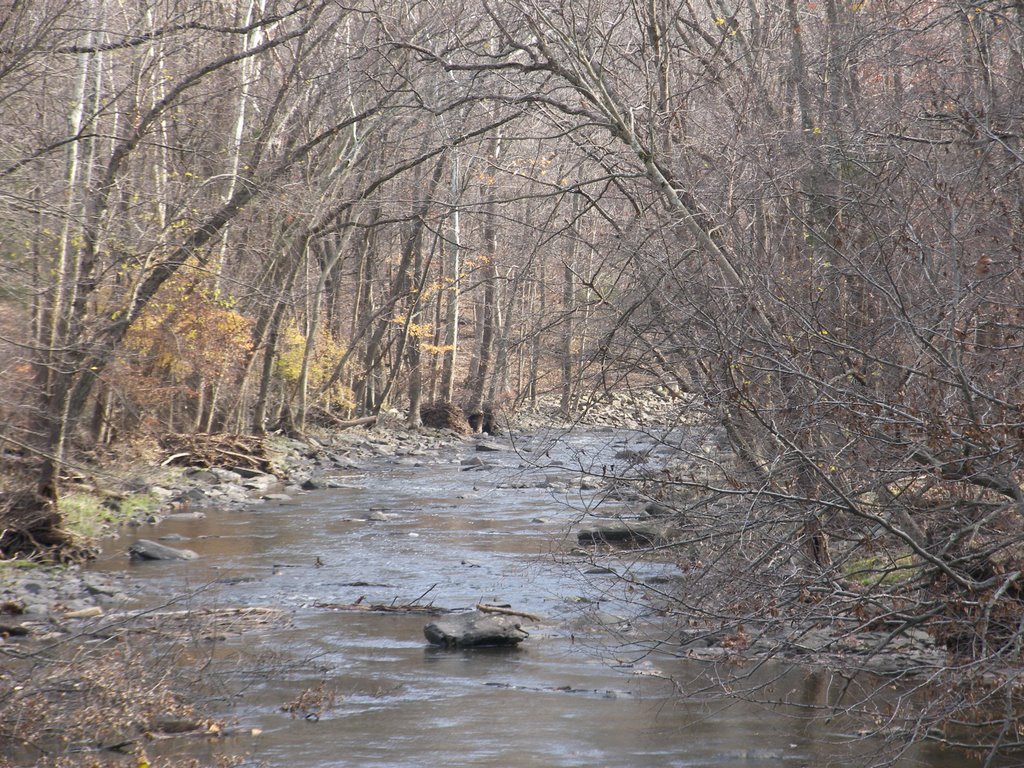
Lokatong Creek is about a quarter mile behind the house. You can hear its soft, muffled roar through the trees almost any time of year, except when it's frozen or in drought. The rain is starting now, after several days of warm weather - so warm I've seen forsythia and rhododendron starting to bloom. Here is a view of the creek from early November, as its flow began to slaken after heavy rains.

Tuesday, November 28, 2006

Rosemont Valley


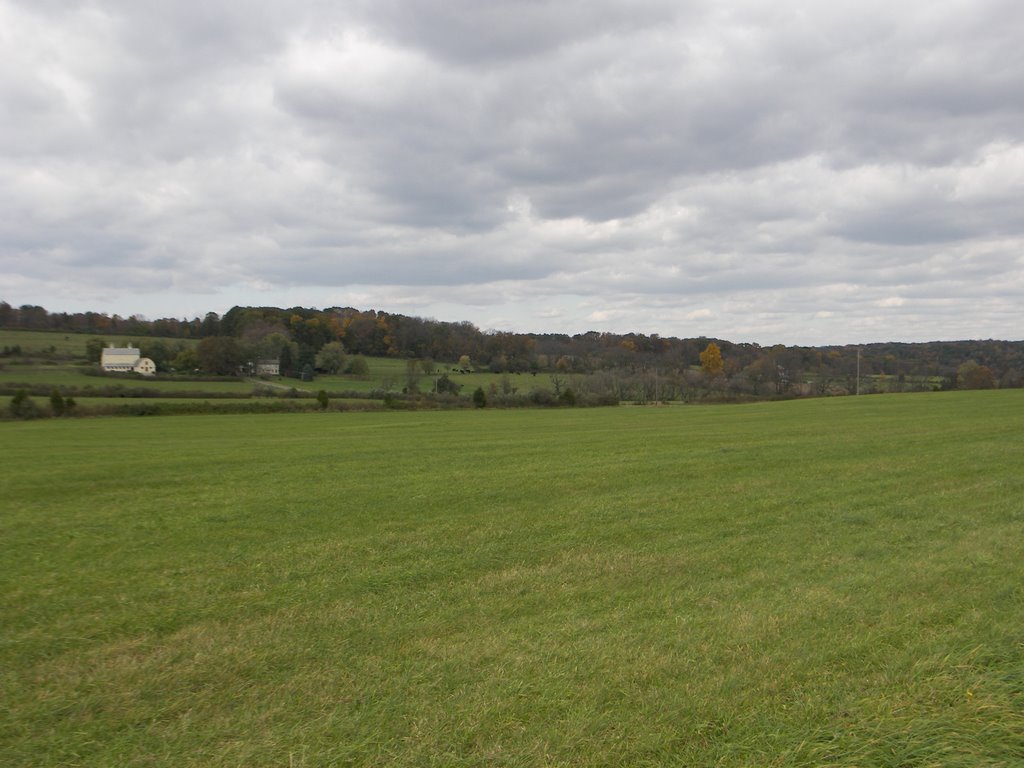
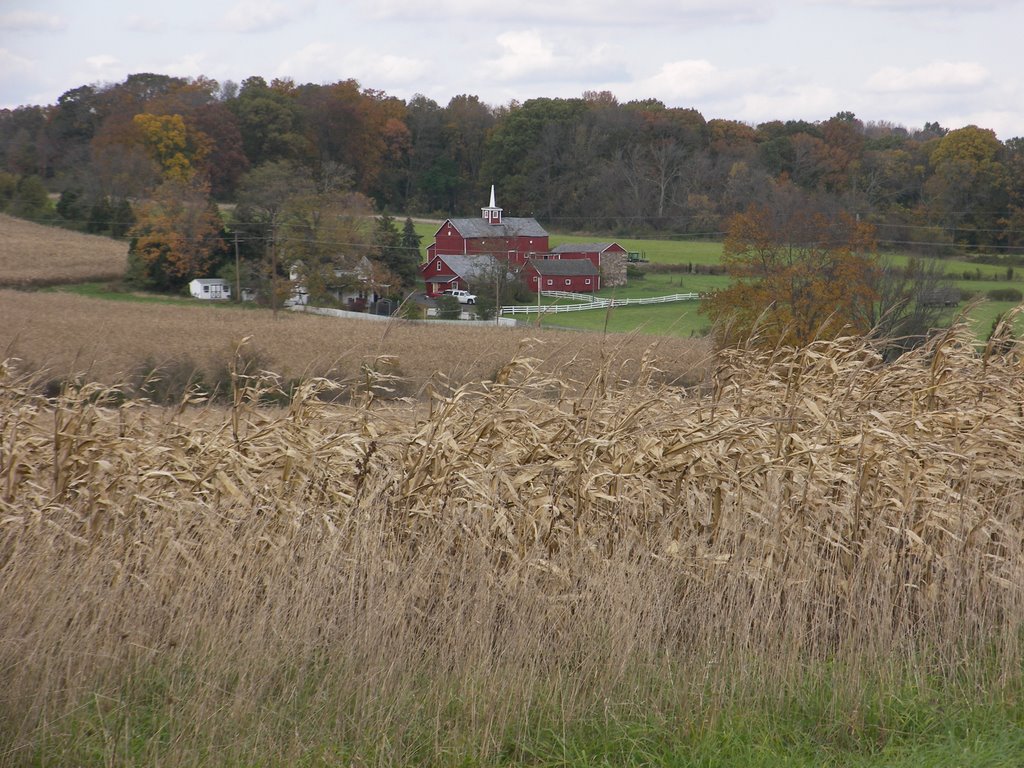
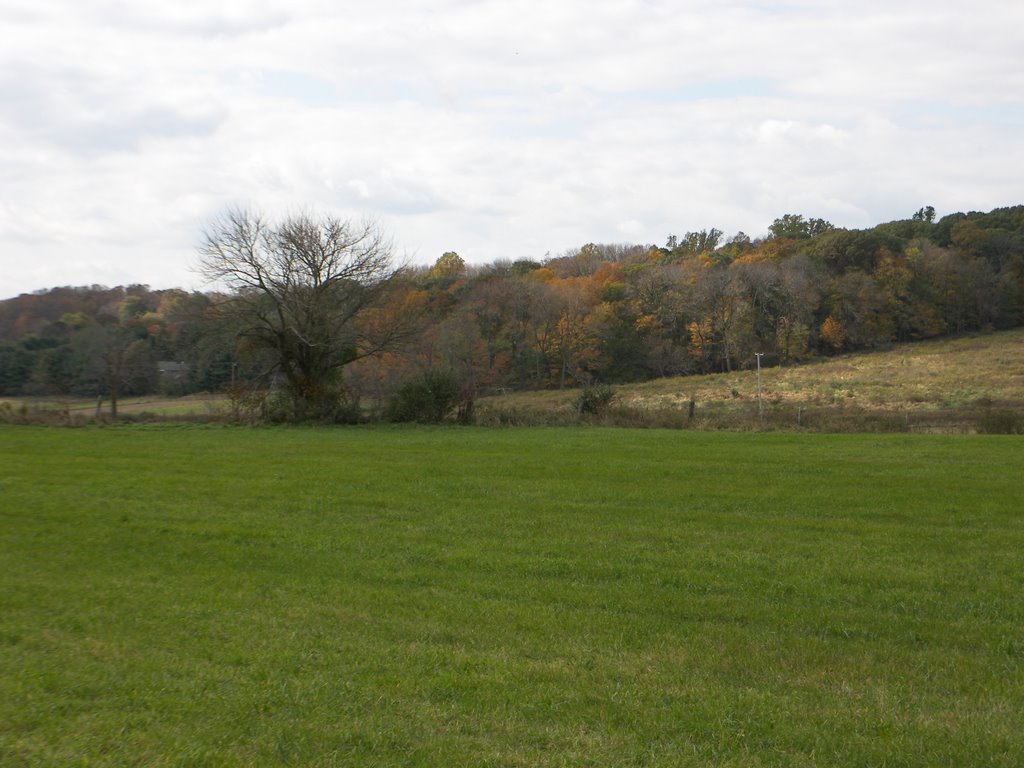
These photos of the Rosemont Valley show an almost idyllic landscape rooted in two centuries of agricultural history. My Rosemont Garden was designed, not to duplicate the look of the valley, but to complement its aesthetic and emotional character - to suit the "genius of the place" in Alexander Pope's words.

The Garden at Federal Twist is only four miles away as the crow flies, but it's a world apart, a closed setting in the woods, with a tree-ringed circle of sky, protected by the surrounding forest, not open, windy and bright like the Valley. I'm slowly working out the nature of the new garden, but I'll remember it's still only four miles from Rosemont, and try to preserve something of that memory.


(Click on the photos to get a better sense of the scale of the landscape.)

Wednesday, November 15, 2006

Seedheads in the garden

Noel Kingsbury's Seedheads in the garden is written for gardeners who haven't yet become converts to the beauty of plants in the fullness of autumn, or the opportunities they provide for continuing interest - and moments of wonder - during their death and decay in winter. The new book lacks the poetry of Designing with Plants (written with Piet Oudolf) and the erudition of Planting Design: Gardens in Time and Space (also with Oudolf), but it carries forward a useful idea. I hope it will reach a wider audience interested in sustainable garden design.

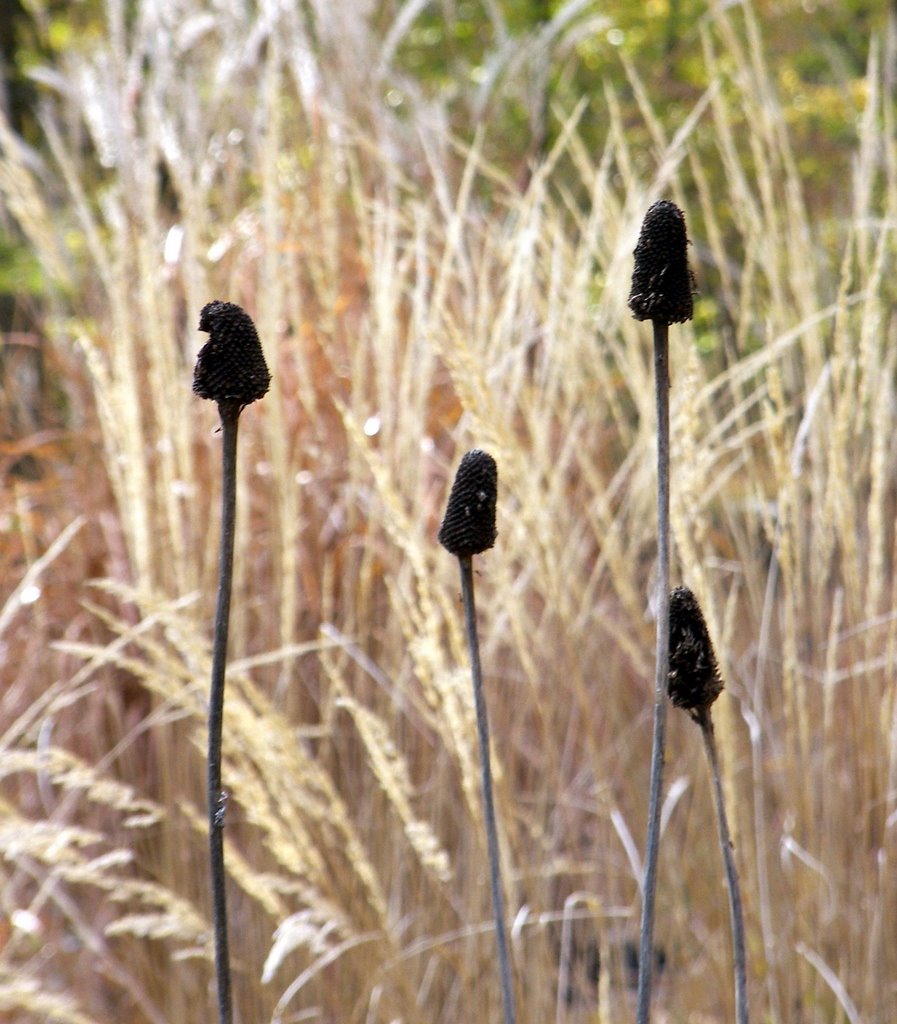
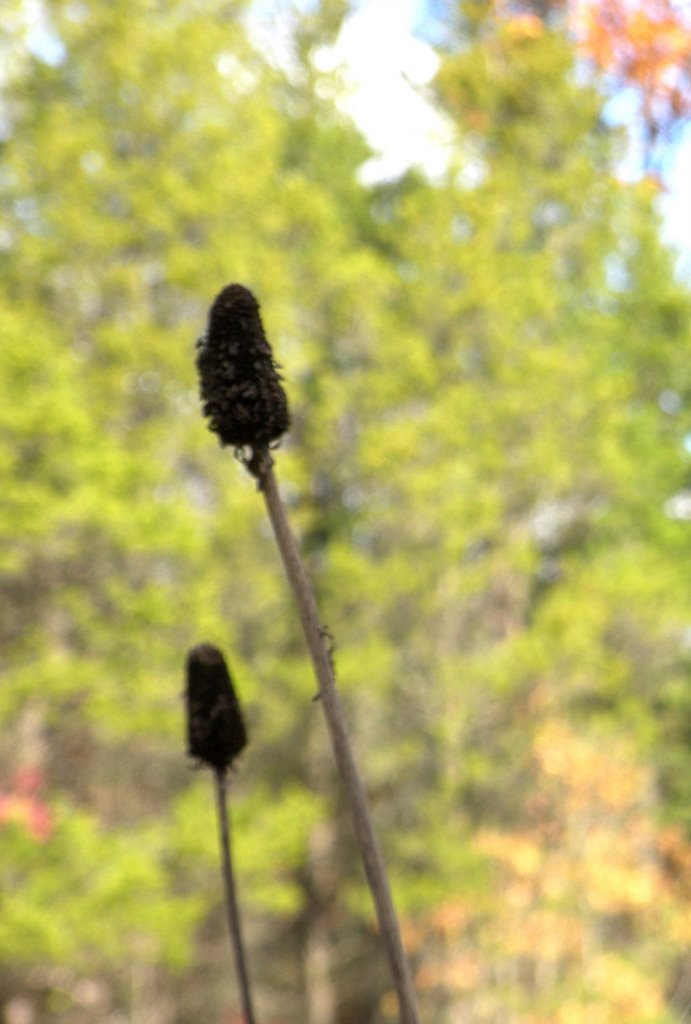
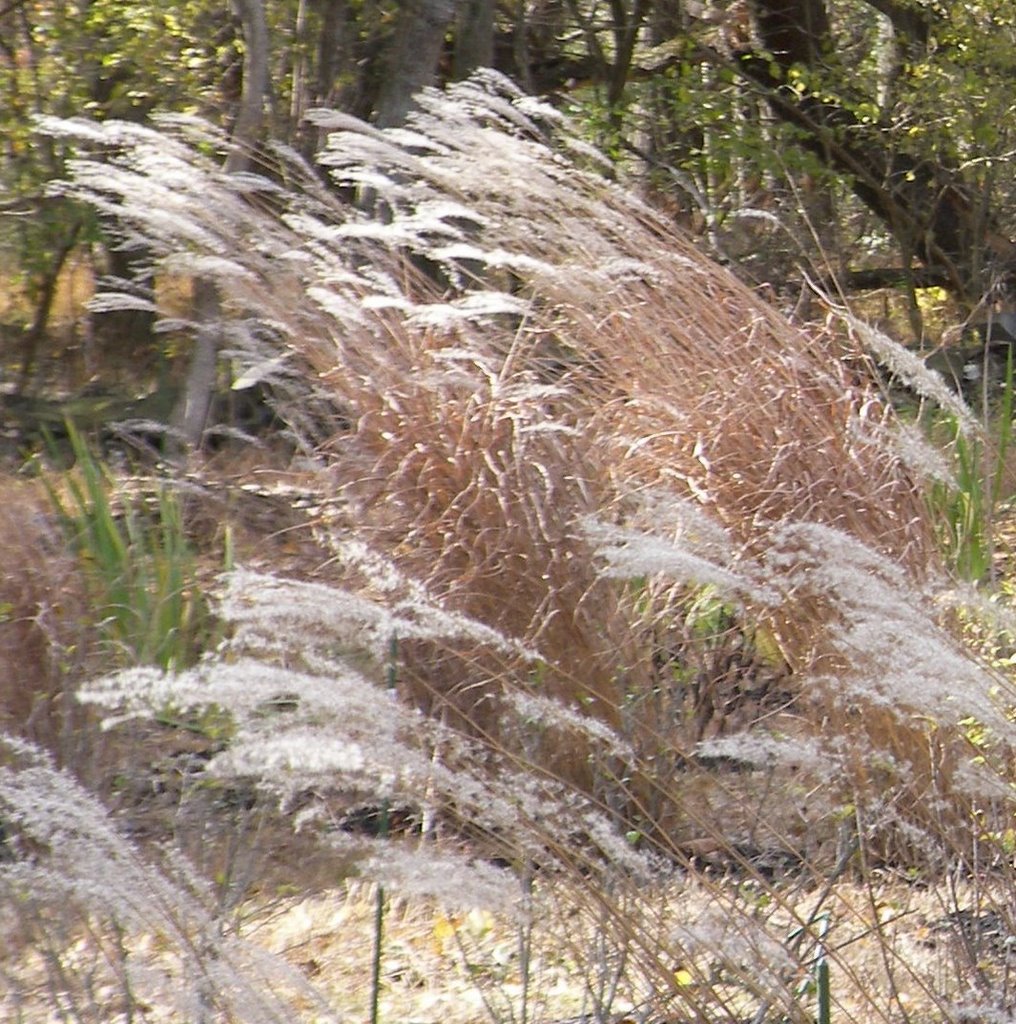
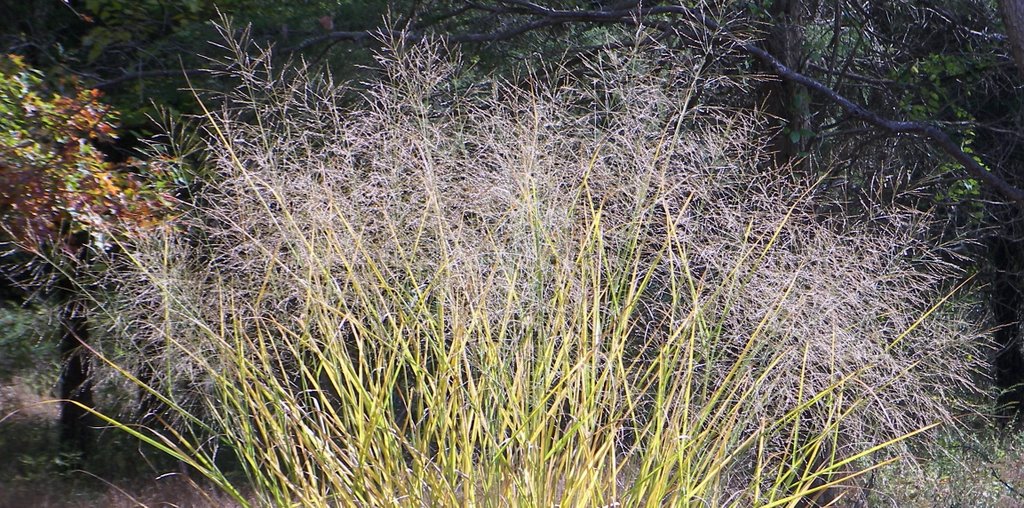
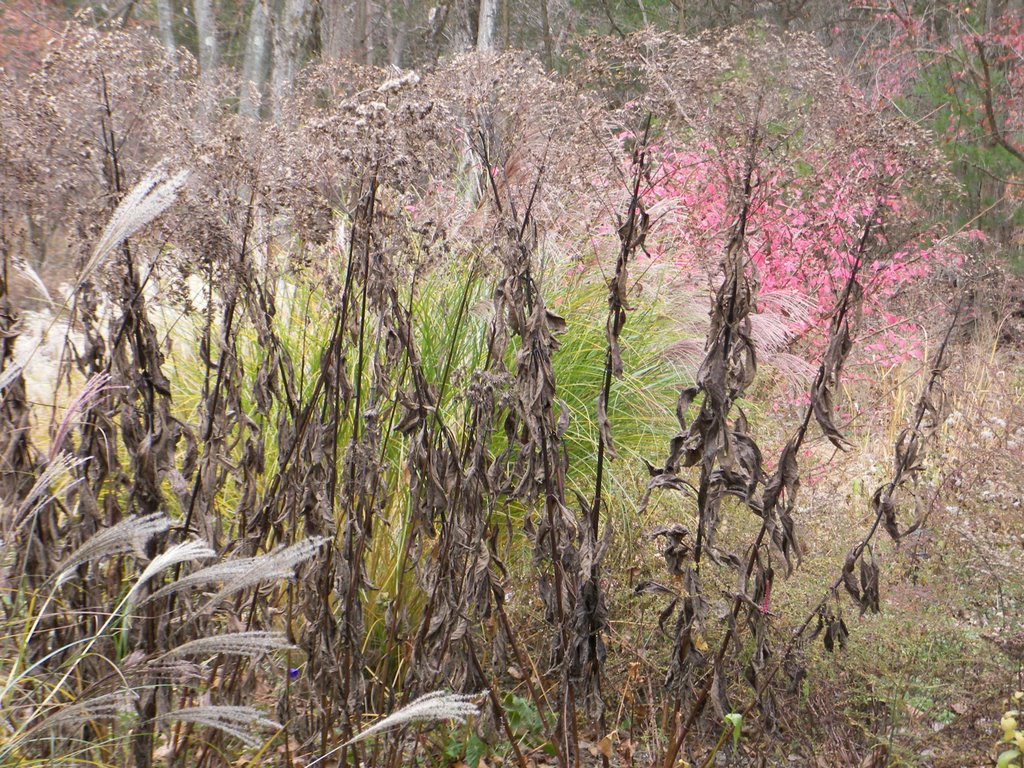
I'm still in the early stages of planting the new garden on Federal Twist Road, but patterns are beginning to emerge, and a collection of seedheads is in the future. Rudbeckia maxima has proven to be deer resistant through the green season, and its large dark brown seedheads (above and right) contrast well with grasses. The grasses, too, offer an even longer lasting, though smaller and more delicate tracery. Miscanthus purpurescens, leaning in the wind in the photo below, is full of drama, while Panicum virgatum 'Cloud Nine' emulates its tranquil cloud-like name. It too can be blown wildly about and lean to the ground in the wind - though the lower photo was taken on a still day - and surprisingly returns upright when the weather settles.

Miscanthus purpurescens


Panicum virgatum 'Cloud Nine'

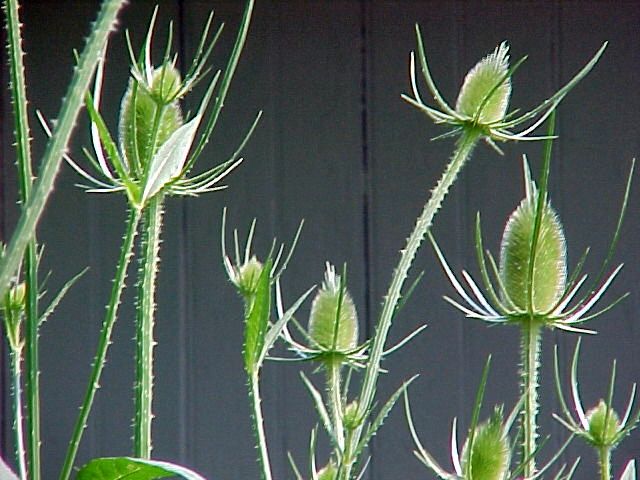
I intended to collect teasel (Dipsacus fullonum) seed in the wild this fall, but never got around to it. I planted it in my garden in Rosemont, where it was especially beautiful in summer, and added interesting structure in winter. Note that it requires careful control, seeding with wild abandon. The last photo shows it in mid-summer.

Dipsacus fullonum

Sunday, November 12, 2006

The Vermont Gardener

Being a fan of slow gardening and fuzzy gardening (gardening in the context of the wider landscape and, well, the universe, I guess), I recommend The Vermont Gardener.

Saturday, November 11, 2006

Chance


An old weeping cherry, planted when the house was built in 1965, frames simple Miscanthus sinensis 'Silberfeder' on a breezy October morning. Unintended movement of the camera exaggerates the light and movement. Just such accidents, serendipities, are the life of a garden, and guide its design. I was at a meeting yesterday in Crystal City, an office development in Arlington, Virginia, jammed up beside Washington National Airport. The Crystal City plantings were quite obviously expensive, and very attractive in an office park kind of way, but that neat, overly manicured style isn't my idea of a garden. There's too much of the cookie cutter architect's vision about it. Better a little mess, accident, and chance, or at least a suggestion of something not entirely within our control. Ironically, those Crystal City plantings are only about a half mile from Oehme & Van Sweden's thrilling plantings at National Airport.

Sunday, November 05, 2006

Joe Pye Weed: Eupatorium purpureum subsp. maculatum 'Purple Bush'


A valuable perennial - one of my favorites. It's easy to grow anywhere that's a little damp, and it's rather deer resistant if you can help it get above deer grazing height by hiding it in ornamental grasses or providing early physical protection. Some survive the deer even without your help.

This is a plant with good structure - one of the strongest, easily standing up to heavy snow in my Delaware River Valley garden - beautiful umbelliferous flower heads, and distinctive foliage that makes a strong geometric statement. Though it grows in clumps, it's a good competitor and does very well in a naturalistic garden setting, easily holding its own among other aggressive plants.

Joe Pye Weed is beautiful throughout the year, providing a pale creamy frosting of color as the buds emerge in early summer, large, sometimes huge, compound flower heads in late summer then, as weather cools, turning dark mahogany in autumn rain, and a leaden brown, almost black, as the weather cools.


It would be a mistake to cut it down in the fall. The darkening color makes it a good foil for the brighter ornamental grasses, and it stands tall, turning into winter sculpture in frosts, freezing rains, and snow.

Click on the photos to see more detail.

Tuesday, October 31, 2006

Piet Oudolf: planting design for the High Line

For a recent visit to the finished High Line (Part 1), click here.


Since this post in 2006, the first part of the High Line has been completed with
great success. I visited last night (Aug. 24, 2009) and encountered crowds of visitors.
To find several additional posts on the High Line as it was being constructed and planted,
type "High Line" in the search box at the top of this blog.

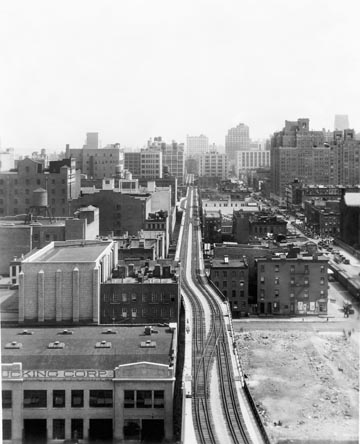
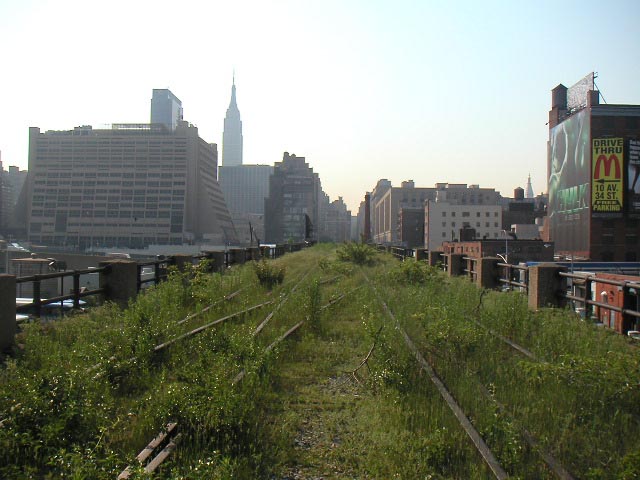
The High Line, an abandoned elevated rail line on the West Side of Manhattan, is being converted into a linear park and trail. For the first time in New York City, this innovative park will introduce Piet Oudolf's work on a large scale. While his plantings for the Memorial Gardens in Battery Park are a successful and attractive feature of Manhattan's southern tip, the High Line is a much more ambitious and challenging project that promises to attract widespread attention.

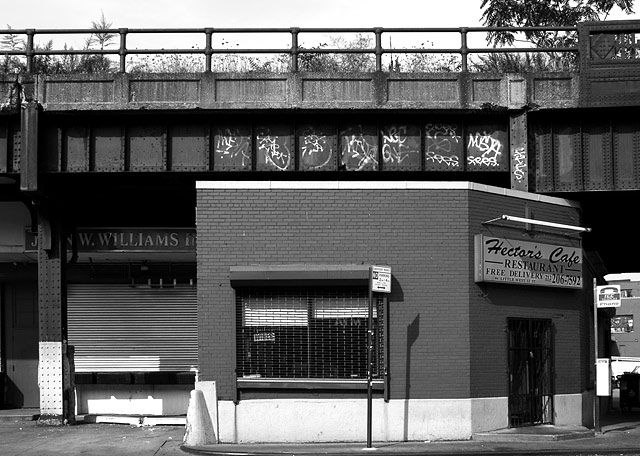
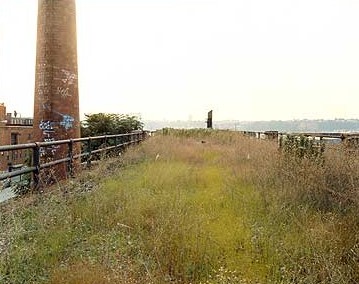
The High Line linear park concept was inspired by the natural growth of vegetation on the elevated line after it was abandoned in the late 1970s. As urban wilderness overflowed the elevated concrete, steel and riveted structure, it developed quite a following among urban naturalists and seekers after the unusual and novel. It was just this wildness, the sense of wilderness within one of the largest cities on earth, that captured the imaginations of so many.


A group named the Friends of the High Line, the City of New York, and numerous supporters have finally succeeded in creating a vision, and finding funding, for the new linear park, which will run from the area of Penn Station south through Chelsea, into the old meatpacking district at 14th Street, a former derelict area that has become quite trendy.


The diverse, opportunistic flora that insinuates itself in the abandoned interstices of cities is an emblem of the power of plant life to recover (literally, re-cover), reclaim, and restore waste areas - as well as a symbol suggesting a lost, abandoned world of the future. The High Line website takes an upbeat and practical view of the project: "Preliminary designs focus special attention on integrating planting areas with planked public walkways, creating a diverse series of interactions between the High Line, its users, and the spontaneous landscapes that come to inhabit man-made structures over the course of time."

The design team selected for the project is Field Operations and Diller Scofidio + Renfro, with Piet Oudolf as the planting designer. Design is now under way and necessary demolition work has already begun. Piet Oudolf presented examples of his recent design work, as well as preliminary concepts for High Line planting design, last April at a theatre in Chelsea. If you know Oudolf’s work, you will find this to be a trove of this master plantsman’s sensuous photography and cutting edge garden designs. Go to the Piet Oudolf and the High Line link below to see the five part presentation. You will need Adobe Reader, which you can download from the site if you don’t already have it. For more on the history of the High Line and selection of the design team, see the New York Architecture Images link.


Piet Oudolf and the Highline

New York Architecture Images

Sunday, October 29, 2006

Aconitum carmichaelii and signs of life vanished


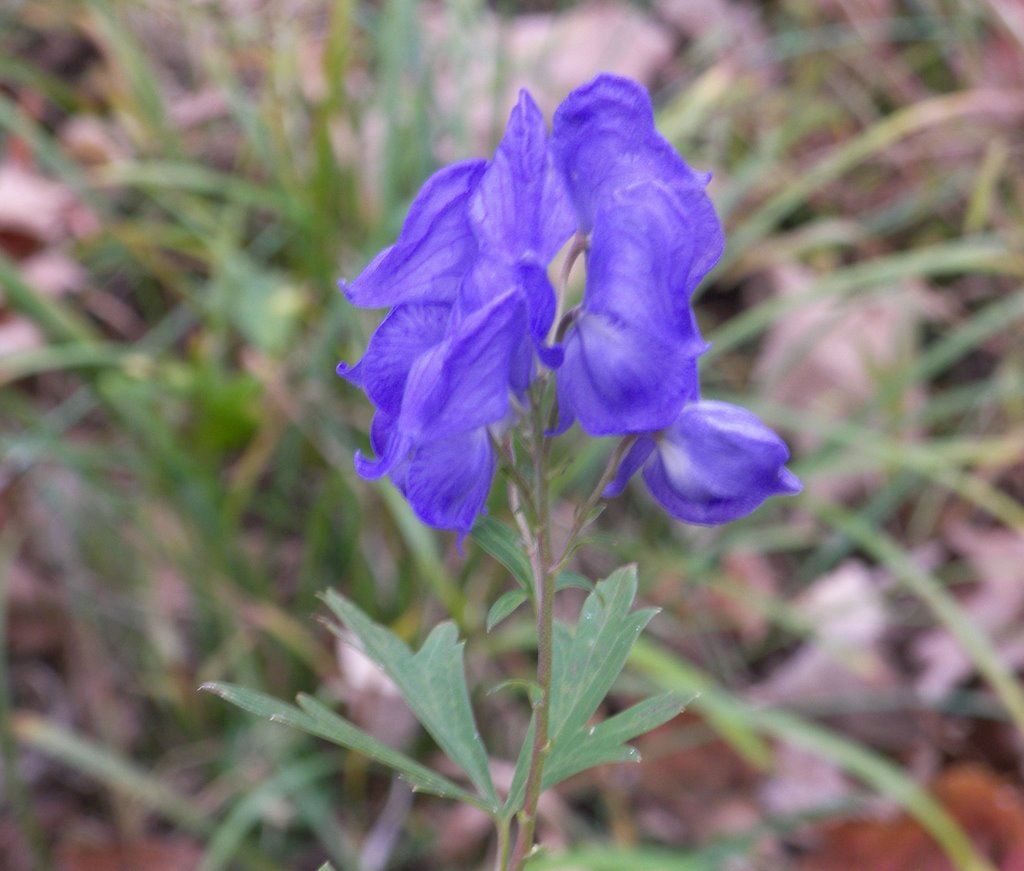
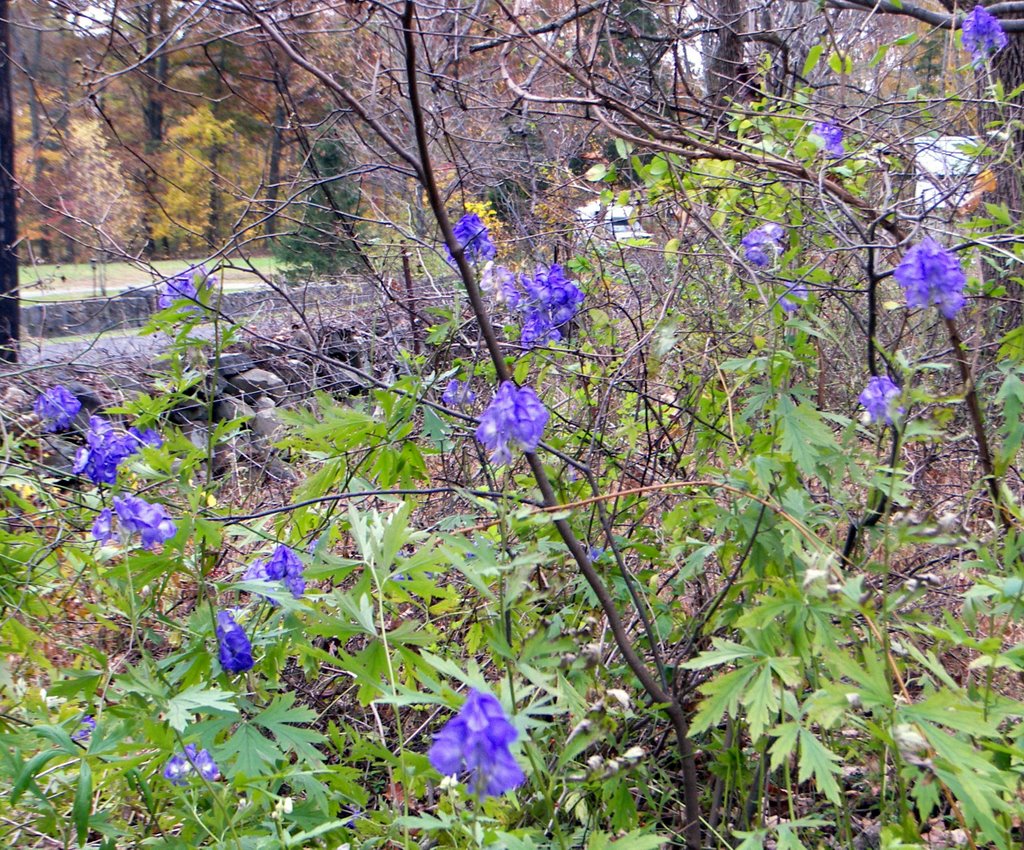
At the end of October, I've found three colonies of Aconitum carmichaelii in bloom on the roadside within two miles of our home. Two seem to have been planted many years ago as ornamentals on the grounds of an impressive prerevolutionary stone house on Strimples Mill Road. The third is on Federal Twist Road, apparently near the location of an old homestead, now vanished.

Surviving non-native plants are signs of former habitation throughout this area, and set the mind to thinking of the unknowable history that has passed here - the Lenape people, who must have used the nearby Lockatong Creek as a resource for living and hunted these woods, the ancient stone rows that show this inhospitable land must once have been farmed, though with great difficulty, the wives, almost certainly they were wives, who planted wisteria and monkshood and who knows what else?

LinkWithin

Related Posts with Thumbnails