Noel Kingsbury's
Seedheads in the garden is written for gardeners who haven't yet become converts to the beauty of plants in the fullness of autumn, or the opportunities they provide for continuing interest - and moments of wonder - during their death and decay in winter. The new book lacks the poetry of
Designing with Plants (written with Piet Oudolf) and the erudition of
Planting Design: Gardens in Time and Space (also with Oudolf), but it carries forward a useful idea. I hope it will reach a wider audience interested in sustainable garden design.
I'm still in the early stages of planting the new garden on Federal Twist Road, but patterns are beginning to emerge, and a collection of seedheads is in the future.
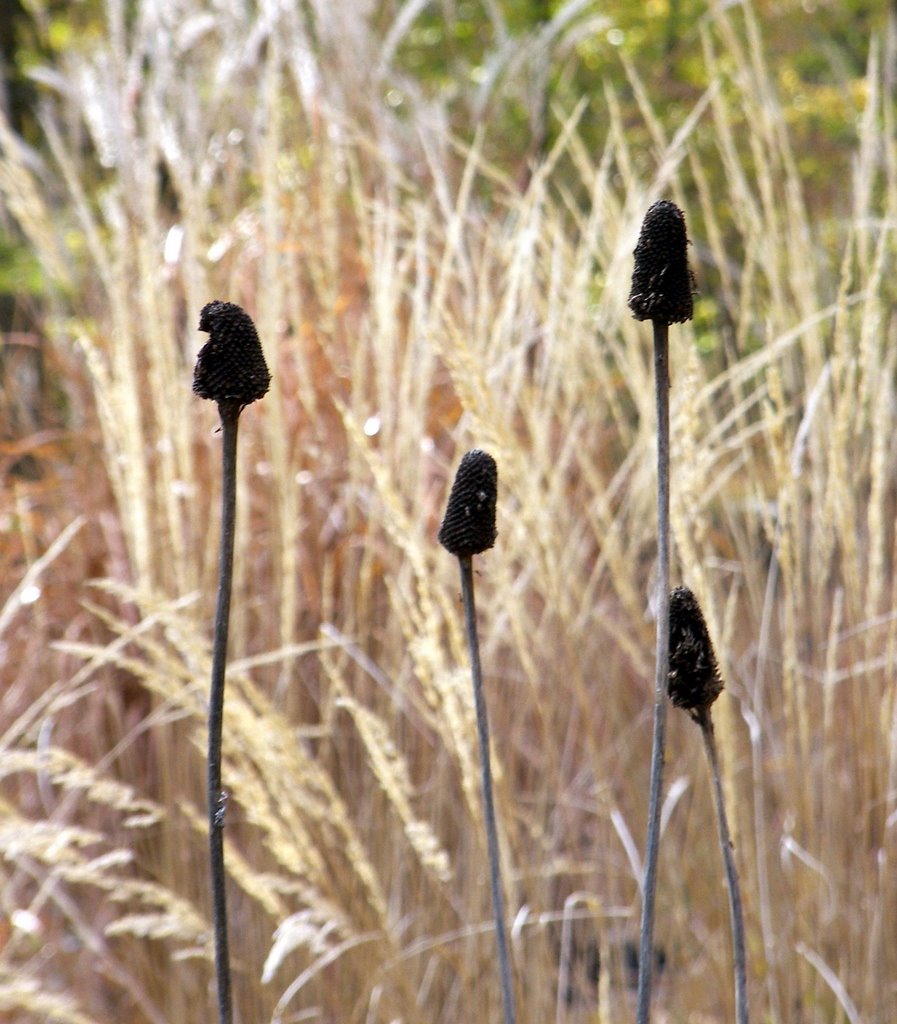
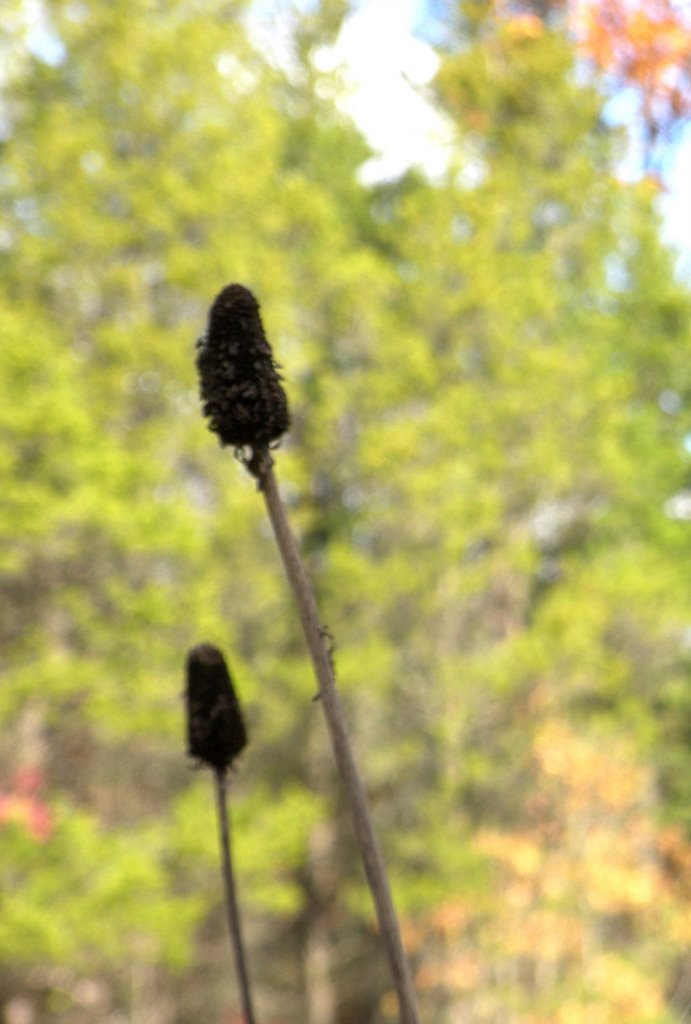
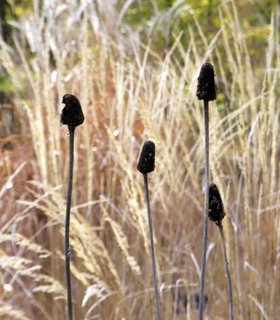
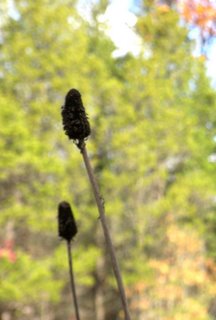
Rudbeckia maxima has proven to be deer resistant through the green season, and its large dark brown seedheads (above and right) contrast well with grasses. The grasses, too, offer an even longer lasting, though smaller and more delicate tracery.
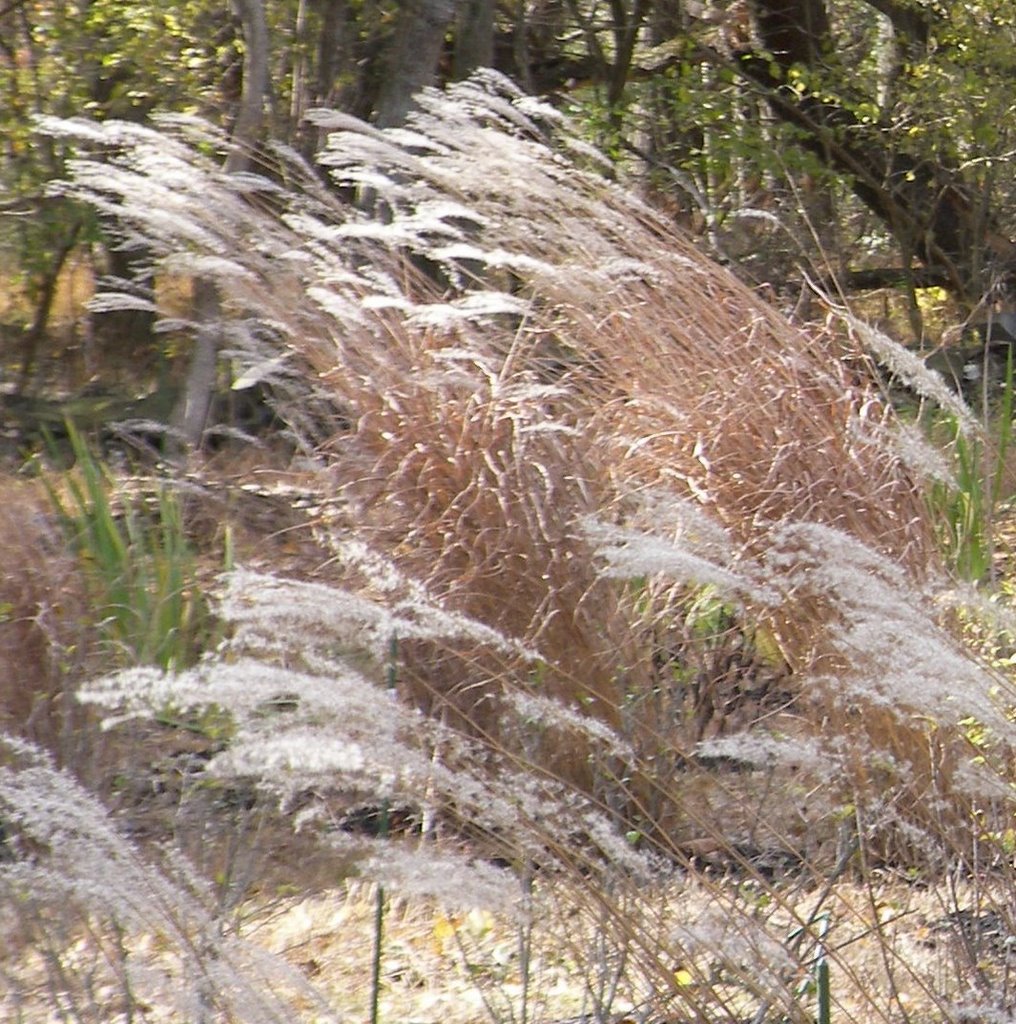
Miscanthus purpurescens, leaning in the wind in the photo below, is full of drama, while
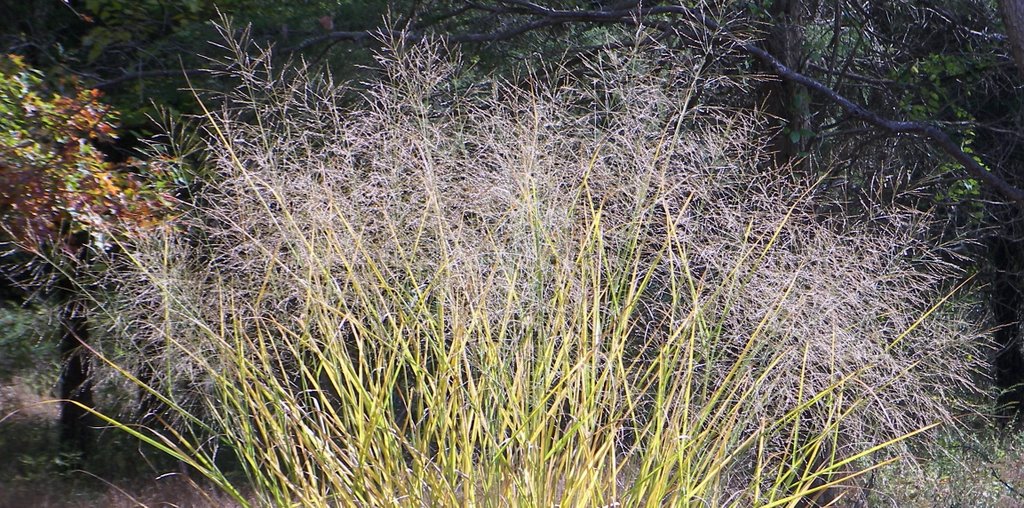
Panicum virgatum 'Cloud Nine' emulates its tranquil cloud-like name. It too can be blown wildly about and lean to the ground in the wind - though the lower photo was taken on a still day - and surprisingly returns upright when the weather settles.
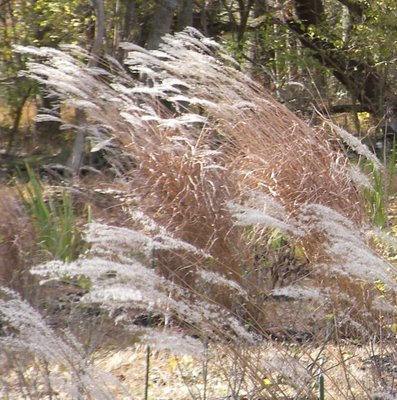 Miscanthus purpurescens
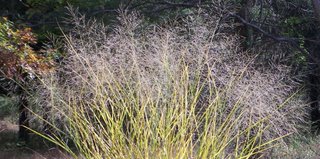 Panicum virgatum 'Cloud Nine'
I intended to collect teasel (
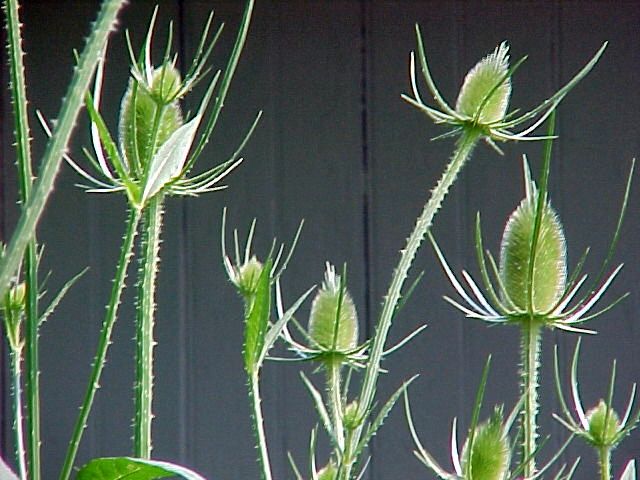
Dipsacus fullonum) seed in the wild this fall, but never got around to it. I planted it in my garden in Rosemont, where it was especially beautiful in summer, and added interesting structure in winter. Note that it requires careful control, seeding with wild abandon. The last photo shows it in mid-summer.
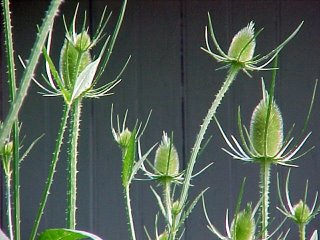 Dipsacus fullonum