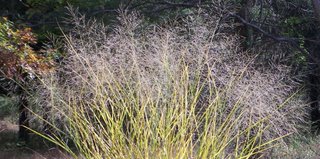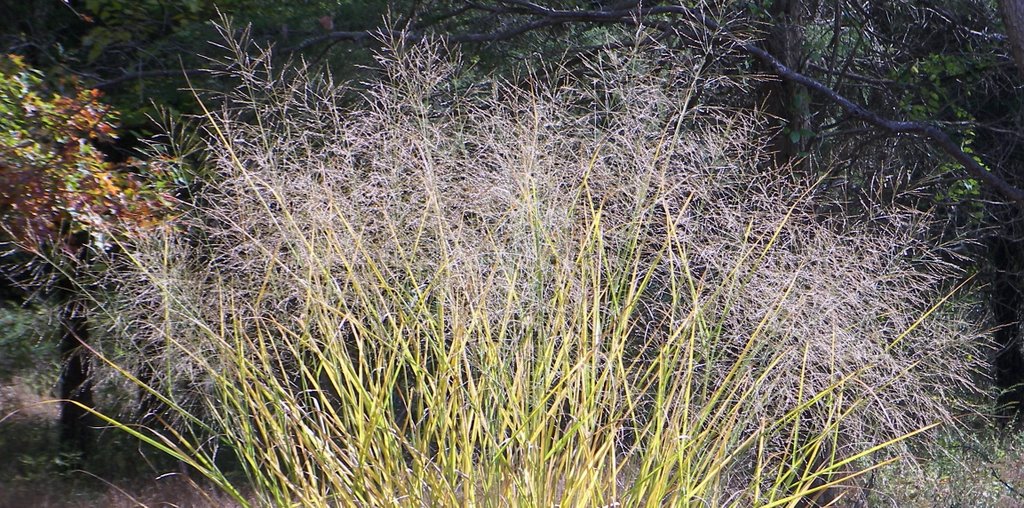
Here's my entry in the Gardens Gone Wild Picture This Photo Contest. One of my favorite grasses is Panicum 'Cloud Nine', so flexible in a breeze ... hardly has any substance it's so light and airy, even ethereal, but it holds up amazingly well late into fall. This was taken mid-October last year. Here it's fronted by a golden bank of bracken.
Showing posts with label Panicum virgatum 'Cloud Nine'. Show all posts
Monday, September 21, 2009
Gardens Gone Wild Picture This Photo Contest
Here's my entry in the Gardens Gone Wild Picture This Photo Contest. One of my favorite grasses is Panicum 'Cloud Nine', so flexible in a breeze ... hardly has any substance it's so light and airy, even ethereal, but it holds up amazingly well late into fall. This was taken mid-October last year. Here it's fronted by a golden bank of bracken.
Monday, October 13, 2008
Chiaroscuro in Autumn
Seven a.m. on a Saturday morning. This is grass season.
At this time of year the low morning sun creates a rich chiaroscuro of lights and darks. The sunlight is starting to bleed through the forest trees, sending transient shafts of light into the garden. Showing this in a photographic image is next to impossible. The scale is hard to establish for a viewer, and the colors and detail can only be seen if you enlarge the photo. Would you think the view above is probably 250 feet wide in the middle distance and three to four hundred feet deep?
Something about this reminds me of the sun-haunted paintings of the Hudson River School - the light settling in the clearing at this moment of stillness, poise, as we approach the autumnal equinox. But this is stillness with a bit of fireworks...when you see the grasses close up, shooting out plumes of white and red. An apparent contradiction here of images of motion in stillness, over abundance, too much fullness turning this peaceful morning into a memory of turmoil.
And here a bright spot of grasses contrasted with dark trunks of dogwoods, the light turning up the color engine, preparing for...
bursts of colors - here Panicum 'Cloud Nine', golden bracken, a maple branch.
And from the other side, Rudbeckia maxima foliage against the most golden bracken around.
One more: a glimpse of the berryland I'm planting between the house and the garden - Ilex verticillata 'Winter Red', Itea virginica, Aster tartaricus 'Jin Dai'.
Wednesday, September 10, 2008
Quiet Incidents
So much happened in the garden in August, these photos bring a bit of calm. The vertical seedheads of Physostegia virginica like miniature towers, with silvery Pycnanthemum muticum, a couple of big leaves of Silphium terebinthinaceum on the right and, at back, Panicum virgatum 'Dallas Blues'...

Panicum 'Cloud Nine' as background to Rudbeckia maxima seedheads ...

Panicum 'Shenandoah' in flower, its leaves ruby streaked. The Physostegia and Joe Pye are out of focus, but the three plants make an interesting study in vertical structure. Click on the photo to see fireworks ...
Panicum 'Cloud Nine' as background to Rudbeckia maxima seedheads ...
Panicum 'Shenandoah' in flower, its leaves ruby streaked. The Physostegia and Joe Pye are out of focus, but the three plants make an interesting study in vertical structure. Click on the photo to see fireworks ...
Monday, July 28, 2008
Garden Diary: July Exuberance
Above is the entry to the wet prairie garden, by way of the small pond. Below is a photo tour, moving roughly clockwise around the garden.
And Rudbeckia maxima with Cloud Nine.
Ernst, at over 6 feet, illustrates my penchant for giant plants. I do have to put more work into the groundcover layer.
Still working on this planting of Pycnanthemum muticum, Miscanthus s. 'Silberfeder', and a hybrid Petasites japonicus. This is copied from an Oehme and Van Sweden design ("imitation is the sincerest ...")
Silphium laciniatum against Miscanthus purpurescens and Miscanthus gigantius.
Looking across the widest part of the prairie - about 250 feet - through a foreground screen of Spartina pectinata variegata (above) and through Salix alba Britzensis (below). The ribbon curls of the spartina are a nice contract to all the verticals; I should add more (but will divide and replant since it's rather invasive). The golden glow is Filipendula foliage.
Wednesday, November 15, 2006
Seedheads in the garden
Noel Kingsbury's Seedheads in the garden is written for gardeners who haven't yet become converts to the beauty of plants in the fullness of autumn, or the opportunities they provide for continuing interest - and moments of wonder - during their death and decay in winter. The new book lacks the poetry of Designing with Plants (written with Piet Oudolf) and the erudition of Planting Design: Gardens in Time and Space (also with Oudolf), but it carries forward a useful idea. I hope it will reach a wider audience interested in sustainable garden design.
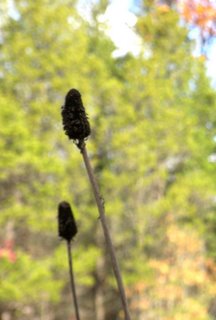
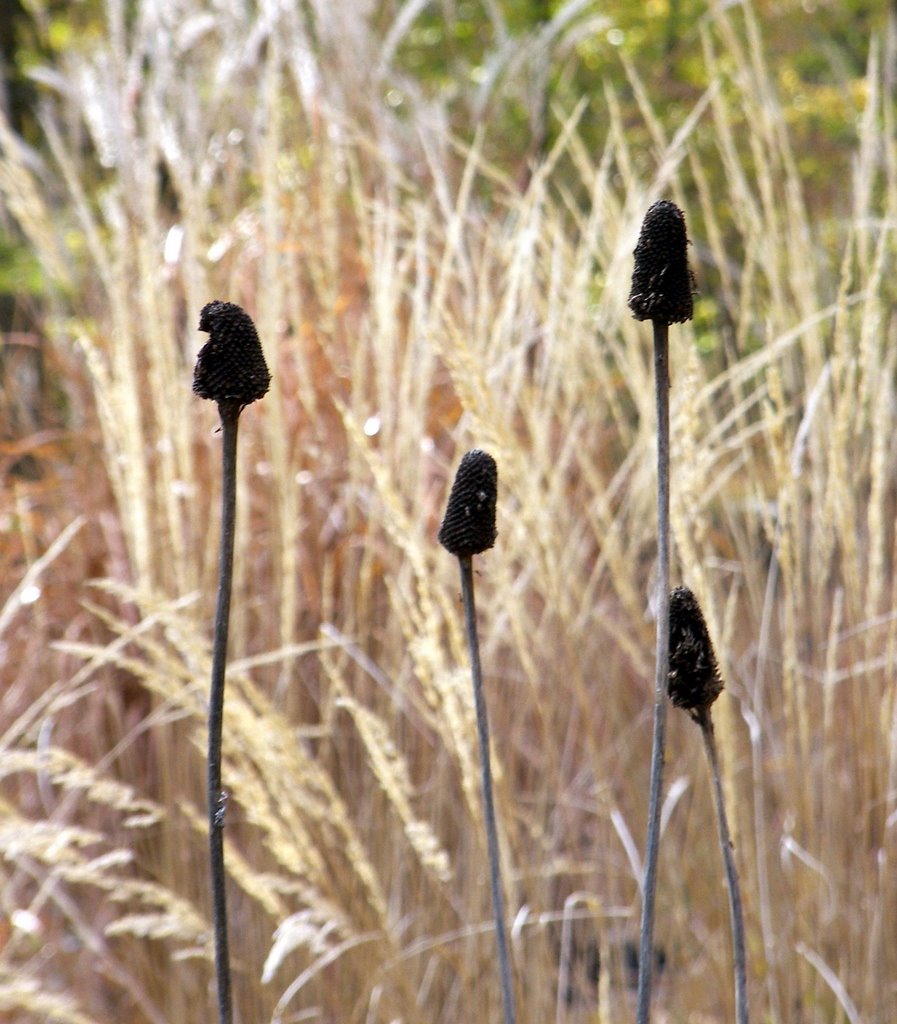
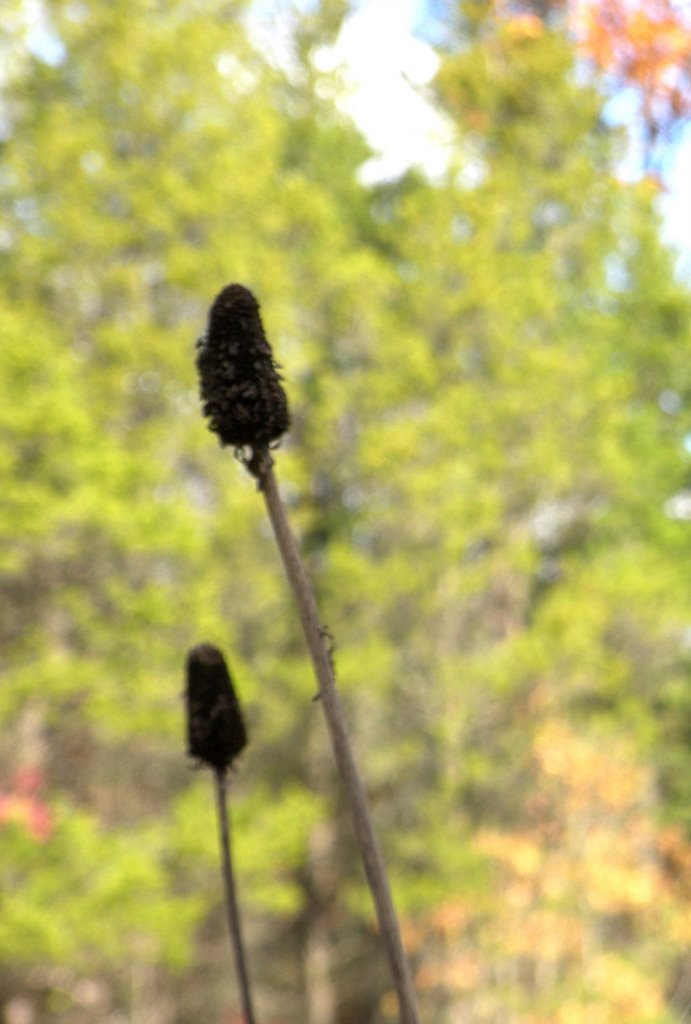
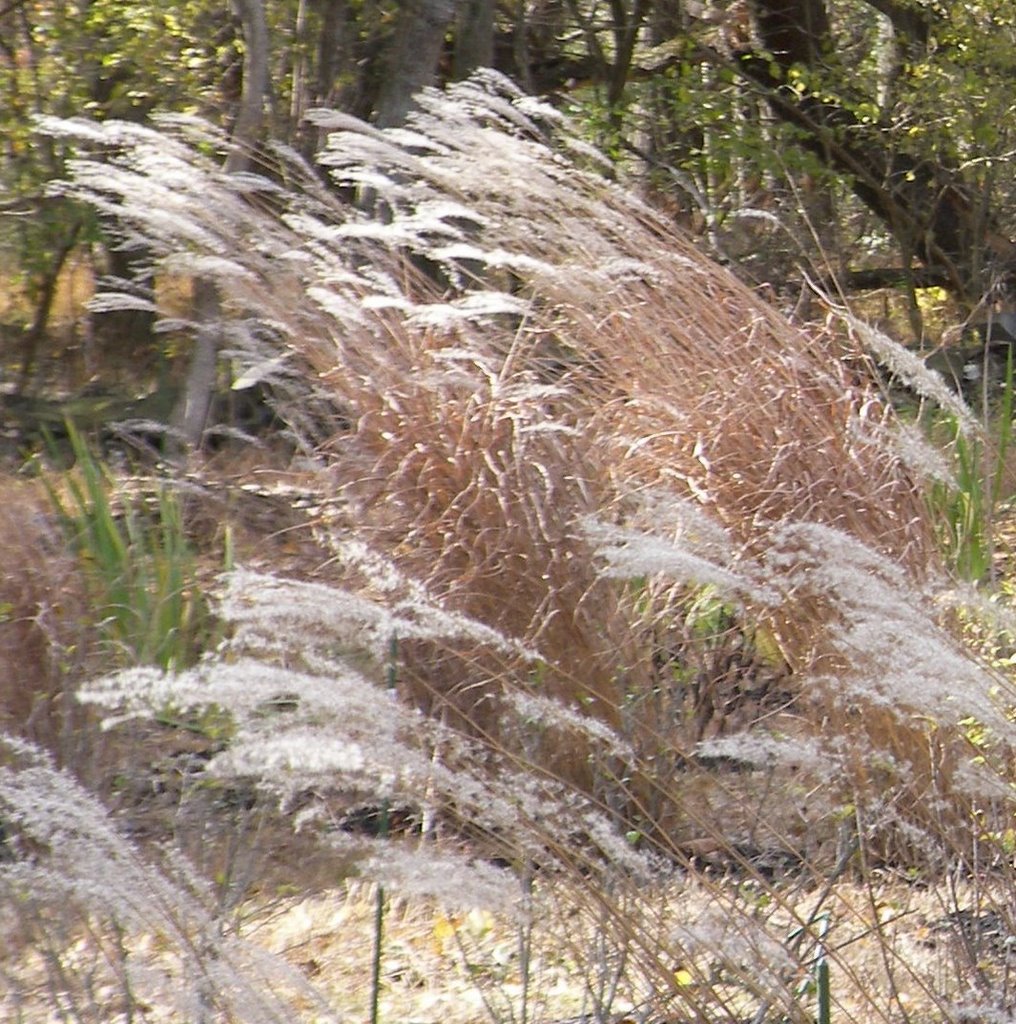
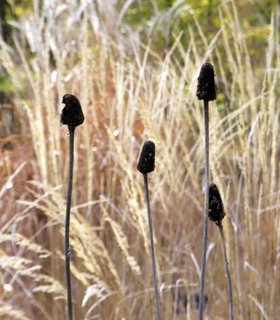
I'm still in the early stages of planting the new garden on Federal Twist Road, but patterns are beginning to emerge, and a collection of seedheads is in the future. Rudbeckia maxima has proven to be deer resistant through the green season, and its large dark brown seedheads (above and right) contrast well with grasses. The grasses, too, offer an even longer lasting, though smaller and more delicate tracery. Miscanthus purpurescens, leaning in the wind in the photo below, is full of drama, while Panicum virgatum 'Cloud Nine' emulates its tranquil cloud-like name. It too can be blown wildly about and lean to the ground in the wind - though the lower photo was taken on a still day - and surprisingly returns upright when the weather settles.
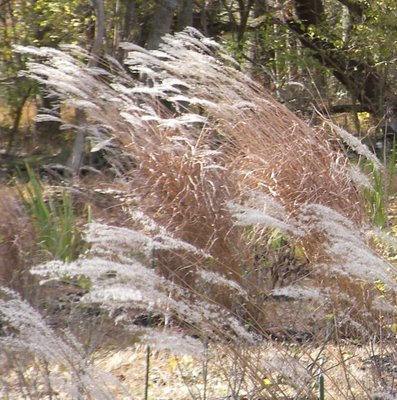
Miscanthus purpurescens
Panicum virgatum 'Cloud Nine'
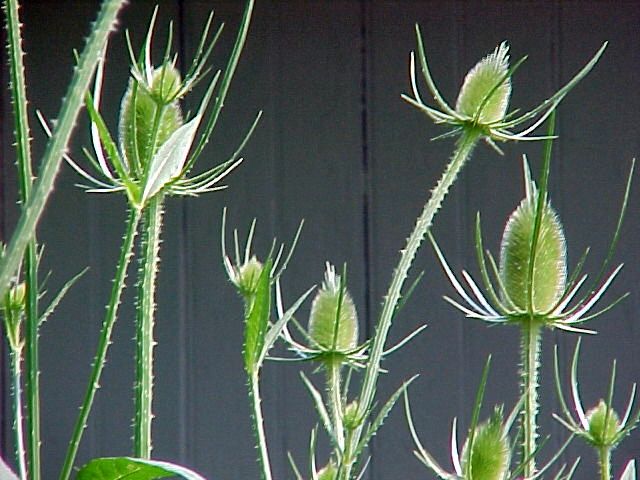
I intended to collect teasel (Dipsacus fullonum) seed in the wild this fall, but never got around to it. I planted it in my garden in Rosemont, where it was especially beautiful in summer, and added interesting structure in winter. Note that it requires careful control, seeding with wild abandon. The last photo shows it in mid-summer.
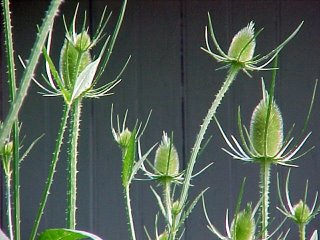
Dipsacus fullonum
Subscribe to:
Posts (Atom)